

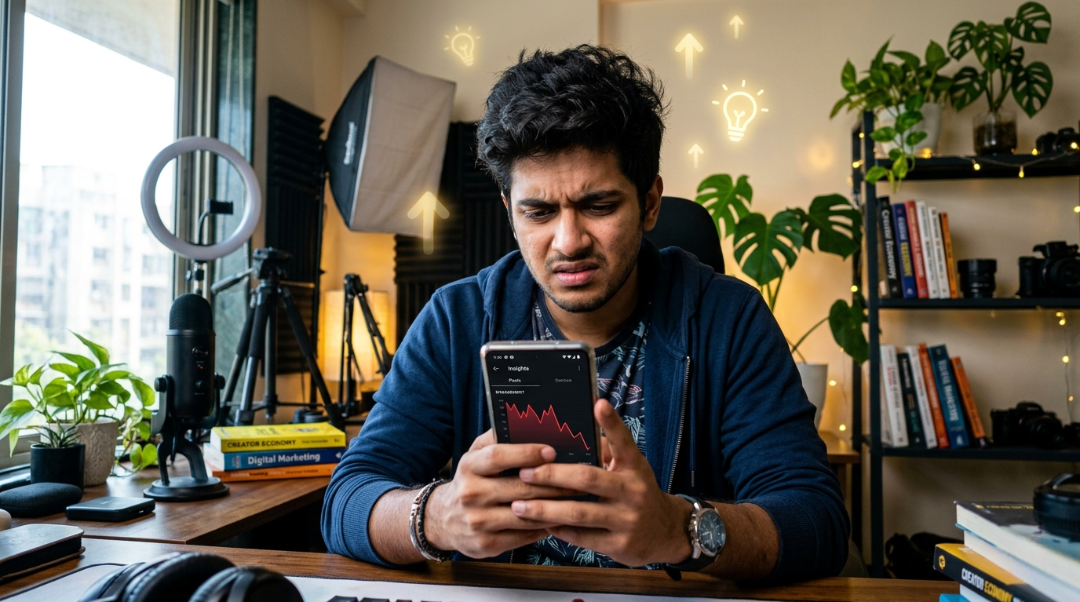
Have you checked your Instagram insights lately and felt that sinking feeling? One week your posts were getting decent views, the next—almost nothing. Likes barely move the needle, Reels that used to fly now sit idle, and even your loyal followers seem to miss your content.
You’re not alone, and it’s not (entirely) your fault. Instagram’s algorithm changed again in early 2026, and this shift feels bigger than the usual tweaks. Many creators and businesses across India and globally are watching their reach drop by 30-50% or more.
The platform isn’t broken—it’s evolving into a smarter recommendation engine that cares less about follower count and more about real attention and value. If your content isn’t holding eyes, sparking saves, or getting shared in DMs, the algorithm quietly limits who sees it.
Here’s the good news: understanding these changes can help you bounce back stronger. Let’s break down what’s really happening and what you can do about it—without chasing every new trend or burning out.
What Exactly Changed in the Instagram Algorithm in 2026?
Instagram has been moving away from a simple “follower-first” model for years. By 2026, it’s fully become a recommendation-first platform. Your content doesn’t automatically show to your followers anymore. Instead, it gets tested on small audiences and expands based on performance signals.
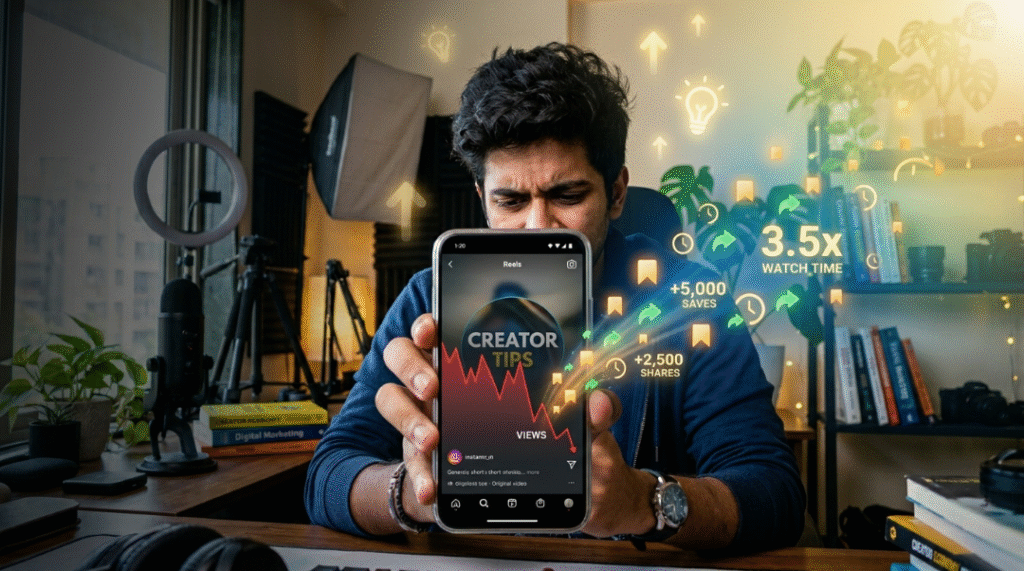
Recent updates (including signals spotted around April 2026) put heavy weight on:
- Watch time — Not just views, but how long people actually watch.
- Saves and shares (especially DM sends) — These show the content was truly useful or entertaining.
- Original content — Reposts, watermarked TikToks, or recycled material get pushed down hard. Instagram algorithm 2026
Adam Mosseri and Instagram’s team have emphasized that the algorithm now uses an “audition system.” New posts get a small initial push. If early viewers scroll past quickly or don’t engage meaningfully, distribution stops. If they watch longer, save it, or send it to friends, it spreads wider—even to non-followers.
This explains the sudden drops many noticed. Old strategies that relied on pretty photos, generic captions, or high like counts no longer cut it. The platform wants content that keeps people on Instagram longer and creates real connections.
Did you know? Posts with strong saves and shares can outperform those with thousands of likes but low retention. Quality of engagement now beats quantity.
Why Your Reach Dropped So Suddenly
Picture this: You post a nice carousel or Reel like always. In the past, it might reach most of your followers plus some Explore traffic. Now, it gets shown to a tiny test group first. If the first 3 seconds don’t grab attention—or if viewers don’t watch till the end—the algorithm assumes it’s not worth showing further.
Common triggers for the drop include:
- Low watch time on Reels (people swipe away early)
- Too many reposts or watermarked content
- Inconsistent niche signals (mixed topics confuse the algorithm)
- Over-reliance on likes instead of saves/shares
- Using automation tools or third-party apps that raise red flags
Many creators report that feed posts and carousels took a bigger hit, while well-made original Reels still have a chance—if they hook viewers instantly.
Here’s the surprising part: Even big accounts aren’t immune. The algorithm treats every post as a fresh audition. Your follower count helps a little for “connected reach,” but unconnected reach (to new people) depends almost entirely on performance signals.
If your content feels too salesy, too polished, or too similar to everything else, people scroll. And when they scroll, your reach shrinks.
The New Ranking Signals That Actually Matter Now
Instagram has made it clearer than ever what drives distribution in 2026. The top signals include: Instagram algorithm 2026
- Watch Time & Completion Rate — Especially for Reels. A shorter Reel watched fully often beats a longer one with high drop-off.
- Saves — People save content they find useful, inspiring, or worth coming back to.
- Shares (DMs and Story reshares) — This is gold. When someone sends your post to a friend, it tells Instagram your content deserves wider reach.
- Originality — Content created specifically for Instagram (no TikTok watermarks, no obvious reposts) gets a boost. Aggregator accounts posting others’ material without adding value see steep drops.
- Early Engagement Velocity — What happens in the first hour or so still influences the initial test phase.
Likes? They matter less than before. Comments and meaningful replies carry more weight because they show real conversation.
Instagram’s “Your Algorithm” feature also lets users tweak topics they see, making niche clarity even more important. If your account jumps between unrelated topics, the system struggles to recommend you confidently.
Real-World Examples: Who’s Suffering and Who’s Winning
Take a small Indian fashion creator who used to repost trending TikToks with their own voiceover. Reach was decent until early 2026. After the crackdown on watermarked or unoriginal content, their impressions halved.
On the flip side, another creator started posting raw, behind-the-scenes Reels—simple phone videos of daily life in their city, with honest captions. Watch time soared because it felt real. Saves and DM shares increased. Their reach stabilized and even grew to non-followers.
Business accounts selling courses or products often see drops when posts feel too promotional. One coach switched to value-first carousels with practical tips (plus a soft call-to-action at the end). Engagement quality improved, and the algorithm started testing their content on bigger audiences.
These stories repeat across niches—fitness, food, tech, motivation. The winners create content that feels human, solves a small problem, or sparks emotion. The losers chase trends without adding their own twist.
Have you noticed similar patterns in your niche? Which type of post still performs for you?
Pros and Cons of the 2026 Instagram Algorithm Changes
Pros:
- Rewards genuine creativity and authenticity over polished perfection.
- Gives smaller creators a fair shot at reaching new audiences if their content resonates.
- Reduces spam and low-effort reposts, making the platform feel fresher.
- Pushes better user experience—people see content they actually want to watch.
Cons:
- Organic reach feels harder for everyone, especially those relying on volume over quality.
- Sudden drops can be demotivating and hurt small businesses.
- Testing new formats carries risk since every post gets judged quickly.
- Mixed-niche or inconsistent accounts get penalized more.
Overall, the changes favor long-term thinkers who build real connections rather than chasing viral moments.
What to Expect in the Next 3–6 Months
Instagram isn’t stopping here. Expect continued emphasis on originality, with possible stronger labeling or demotion of AI-generated content. Watch time and share signals will likely stay dominant. Instagram algorithm 2026
“Raw” and imperfect content may get even more love as users crave authenticity in a sea of polished posts. Features like better translations and topic controls in “Your Algorithm” could help creators reach wider (or more targeted) audiences.
Competition will stay fierce as more people create content. But accounts that consistently deliver value, experiment smartly, and analyze their insights should see steadier growth.
The algorithm will keep evolving—possibly monthly in small ways. The key isn’t predicting every tweak but building habits that perform well across changes.
Actionable Tips to Fix Your Instagram Reach in 2026
Don’t panic and start posting randomly. Here’s a practical plan:
- Create Original Content Only — Film natively on Instagram or edit without obvious watermarks. Add your unique perspective, even to trending audio.
- Hook in the First 1-3 Seconds — Start Reels with a strong question, bold statement, or surprising visual. Test different openings.
- Optimize for Saves and Shares — Ask yourself: Would someone save this tip? Would they send it to a friend? End with “Save this for later” or “Tag someone who needs to see this.”
- Focus on Watch Time — Keep Reels under 3 minutes (ideally 15-30 seconds for quick hits). Use captions, trending audio, and clear storytelling.
- Post with Purpose — Stick to your core niche. Consistent themes help the algorithm understand and recommend you better.
- Analyze Insights Regularly — Check what content gets the highest “Sends per Reach” or average watch percentage. Double down on winners.
- Avoid Risky Tactics — Skip automation tools, mass following/unfollowing, or buying engagement. They can trigger reduced visibility.
- Experiment with Formats — Try carousels for educational content (people save them) and Reels for entertainment or quick tips.
Start small. Pick one or two tips, apply them to your next 5-10 posts, and track results. Improvement often comes gradually as the algorithm learns your new signals.
The Bigger Picture: Building for the Long Term
This algorithm shift isn’t just about chasing numbers—it’s pushing creators toward more meaningful work. When you focus on content that truly helps or entertains people, growth becomes more sustainable.
Many who felt frustrated in early 2026 later regained (and exceeded) their previous reach by adapting. They stopped treating Instagram like a billboard and started treating it like a conversation.
Your audience wants real value from real people. Give them that, and the algorithm will eventually notice.
What’s one change you’re going to try this week? Drop it in the comments—I’d love to hear and maybe feature helpful tips in a future post.
FAQs
Why did my Instagram reach drop suddenly in 2026? The algorithm now prioritizes watch time, saves, shares, and original content over likes or follower count. Sudden drops often happen when posts fail the initial “audition” test with early viewers.
Is the Instagram algorithm change permanent? Core shifts toward recommendation and quality engagement appear here to stay, though small tweaks will continue. Adapting to watch time and originality will remain important for the foreseeable future.
Do hashtags still matter for reach on Instagram? They help with discoverability but carry less weight than before. Strong content signals (watch time, shares) matter far more than hashtag strategy alone.
How can I check if my account has reduced visibility? Look at insights for sharp drops in reach/impressions. Test by posting a Reel and seeing if it appears in recommendations for non-followers. Avoid third-party tools that promise shadowban checks—they’re often inaccurate.
Will posting more frequently help regain reach? Not necessarily. Quality and consistency in your niche beat volume. Focus on better content rather than flooding your followers with average posts.
(Word count: approximately 1,720)

